Marquee Wind Resistance Guide
How Much Wind Can a Marquee Withstand?
Understanding marquee wind resistance is one of the most important parts of safe outdoor event planning.
Whether you're organising a wedding, running a hospitality venue, hiring out marquees or putting up temporary shelter for a business, wind can have a major impact on how safe a marquee is and how well it performs.
Yet many temporary structures are sold with little practical guidance on wind safety, anchoring or safe operating limits.
At Gala Tent, we carried out a detailed wind resistance assessment across our PVC marquee range. The aim was to give customers, event organisers and commercial operators clearer real-world guidance.
This guide explains what affects marquee wind performance, how different marquee sizes behave as conditions change, and the practical steps you should always take to improve stability and safety.
Why Wind Resistance Matters
Marquees are temporary structures, but that does not mean they should be treated casually.
Incorrect anchoring, poor setup, or exposure to unsuitable weather conditions can result in:
- torn covers
- structural damage
- frame collapse
- uplift or movement
- risks to guests, staff, stock, or equipment
Knowing the safe wind operating conditions helps reduce risk and protects both people and the structure itself.
For commercial operators and venue owners, good setup also cuts downtime, repair costs and event disruption.
What Affects Marquee Wind Resistance?
Several things affect how a marquee performs in windy conditions.
Marquee Size
Larger marquees present more surface area to the wind. That increases uplift pressure and overall structural load.
As marquee size increases, anchoring and site conditions need more attention.
Frame Strength
The strength and rigidity of the framework play a major role in overall wind performance.
Gala Tent PVC marquees use reinforced steel framework systems with welded joints designed to improve structural rigidity under load.
Cover Material
Marquee covers must remain properly tensioned to minimise flapping, movement, and wind stress.
Our PVC marquee covers use heavy-duty 650gsm PVC with high tensile strength to help maintain stability during outdoor use.
Anchoring Method
Correct anchoring is one of the single most important factors in marquee safety.
Soft ground setups using deep ground stakes typically resist wind better than hardstanding setups without enough ballast.
Incorrect or inadequate anchoring significantly increases risk during stronger winds.
Location & Exposure
An exposed open field behaves very differently to a sheltered courtyard or built-up venue space.
Factors including:
- surrounding buildings
- wind tunnels
- elevation
- coastal exposure
- soft ground saturation
can all affect how a marquee performs as the weather changes.
Maximum Recommended Wind Speeds for Gala Tent PVC Marquees
The following guidance reflects maximum recommended operating conditions when marquees are correctly tensioned and anchored.
What Different Wind Speeds Actually Feel Like
Many forecasts give wind speed figures without explaining what those conditions mean for outdoor structures.
This guide gives general context for marquee planning.
Actual safety depends heavily on anchoring quality, exposure, ground conditions, and ongoing weather monitoring.
Safe Marquee Setup Checklist
To maximise marquee wind resistance and overall safety:
- fully tension the canopy during setup
- anchor every leg independently
- use appropriate ballast on hardstanding surfaces
- install ground stakes properly on soft ground
- use ground bars wherever possible
- regularly inspect fixings, ropes, weights, and anchoring points
- monitor local weather conditions throughout deployment
- never leave marquees unattended during severe weather warnings
Even well-engineered structures require proper setup and active monitoring during changing conditions.
Hard Ground vs Soft Ground Anchoring
Soft Ground Installation
Grass and softer surfaces generally allow stronger anchoring, because ground stakes can go deep into the surface.
For best results:
Hard Ground Installation
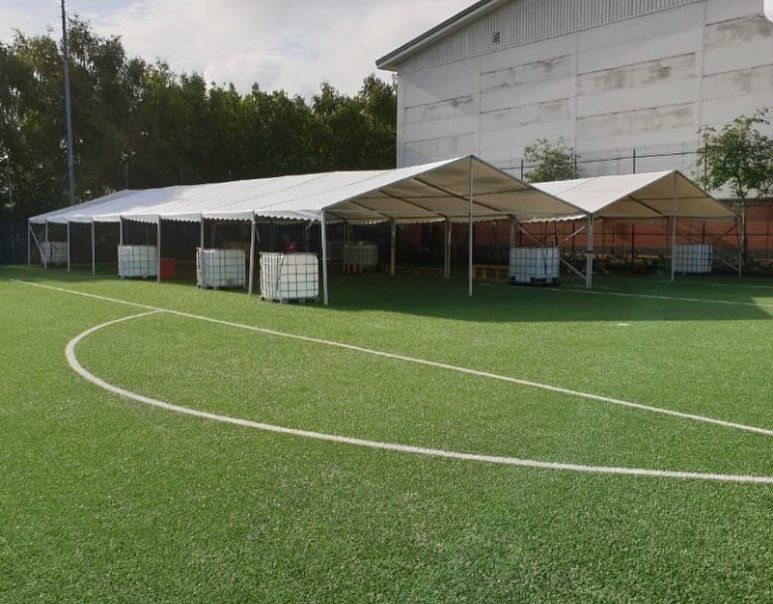
Concrete, tarmac, and paved surfaces require weighted anchoring systems.
Recommended ballast options include:
- water weights
- concrete weights
- steel ballast systems
Larger PVC marquees may require significant ballast per leg to achieve safe operating stability.
What Should You Do in High Winds?
If stronger winds are forecast:
Reinforce Anchoring Immediately
Check all ballast, straps, fixings, and anchoring points before conditions worsen.
Remove Sidewalls if Necessary
In some situations, removing sidewalls can reduce wind loading by allowing airflow through the structure.
Lower or Dismantle the Structure
If wind conditions are expected to exceed recommended operating ranges, dismantling the marquee is often the safest option.
Avoid Leaving Structures Unattended
The highest risk situations often occur when weather conditions change unexpectedly around unattended marquees.
Wind Resistance Is Not Just About Strength
A marquee's safety is not determined purely by framework thickness or material weight.
Real-world performance depends on:
- setup quality
- correct anchoring
- site conditions
- ongoing monitoring
- responsible judgement
Even heavy-duty commercial marquees should always be treated as temporary outdoor structures subject to changing weather conditions.
Download the Full Wind Resistance White Paper
We've put our findings, setup guidance, structural notes and wind performance analysis into a detailed downloadable guide for:
- event organisers
- hospitality venues
- councils
- commercial operators
- marquee hirers
- temporary structure planners
The guide includes:
- wind resistance figures
- setup recommendations
- anchoring guidance
- surface comparisons
- safe operating limits
- structural considerations
Why Gala Tent?
Gala Tent has supplied marquees and commercial event structures across the UK for more than 25 years. We focus on real-world performance, expert guidance and long-term support.
Customers choose Gala Tent for:
- heavy-duty marquee systems
- practical setup guidance
- fast spare parts support
- commercial-grade structures
- weather-resistant event shelters
- long-term reliability
From hospitality venues and event organisers to commercial operators and private customers, Gala Tent structures are built to perform reliably outdoors in tough conditions.
Important Safety Guidance
The wind resistance figures provided on this page are intended as general operational guidance only and assume correct setup, proper anchoring, suitable site conditions, and ongoing weather monitoring.
Actual performance may vary depending on:
- exposure
- terrain
- anchoring quality
- installation method
- surrounding structures
- changing weather conditions
Temporary structures should always be used responsibly and dismantled where conditions become unsafe.
Related Pages
Frequently Asked Questions
What is the maximum wind speed for a marquee?
Are marquees safe in windy conditions?
Is soft ground or hard ground better for marquee stability?
How do you secure a marquee against wind?
Can marquees withstand storm conditions?
Do larger marquees handle wind better?