



How to Use a Gazebo or Marquee in Bad Weather
Wind, rain and storms: what to do before and during the bad weather
Gazebos and marquees can be used in bad weather when every leg is weighted or anchored, the canopy is fully tensioned and someone is watching the forecast. Wind is the main risk. Winds above 30mph can become unsafe depending on conditions and exposure, so on an exposed site the shelter should come down before the wind gets there.

How to Prepare a Gazebo for Bad Weather, Step by Step
The safest events are the ones where the weather has been thought through before setup. Work through these six steps every time you put a shelter up outdoors.
Check the forecast, then check it again
Look at the forecast for the whole period you will be outdoors, then check it again on the day, because conditions can move a long way from the early outlook. Treat the forecast as a starting point and allow a margin above it.
Weight or anchor every leg
Do this as standard, even on calm days. On hard ground use leg weights. On grass, combine heavy-duty pegs and ratchet straps with weights. Our guide to securing a gazebo in high winds covers each method.
Tension the canopy and secure loose items
A fully tensioned canopy sheds rain instead of pooling it. Fit gutters if you have joined units together, and tie down banners, flags and signs, because they catch the wind like sails.
Set your trigger points in advance
Decide before the event when you will open the sidewalls and when you will take the shelter down. A simple rule: open or drop the sidewalls at Beaufort force 6 (25 to 31mph), and have the gazebo down before force 7 (32mph and above).
Name one person in charge
Make one person responsible for watching the forecast and the structure during the event, with the authority to act on the plan without waiting for a discussion.
Photograph the finished setup
A dated photo showing weights and fixings on every leg takes seconds and is useful evidence for insurers and for any inspection.
Is Wind the Biggest Risk to a Gazebo?
Yes. Rain is usually the first worry, but wind is the bigger challenge for any temporary shelter. Strong gusts put stress on frame joints, connectors, canopy tension points, anchoring and sidewalls.
It matters most on exposed sites:
What Wind Speed Is Too Strong for a Gazebo?
Winds above 30mph can become unsafe for a gazebo, depending on conditions and exposure. That is the top of Beaufort force 6, so on an exposed pitch the safest plan is to open or drop the sidewalls early and take the gazebo down before the wind reaches that level.
The Beaufort scale gives a practical way to read the forecast and the conditions on the day. The speeds below are mean speeds, and gusts run higher.
Wind ratings depend on the frame and on the anchoring. The Gala Shade Pro 60 has withstood gusts of over 40mph when anchored with 50kg per leg. That result relied on heavy anchoring on every leg, so treat it as the upper end of what a heavy-duty frame can do and take the gazebo down in gale conditions.
Beaufort descriptions are taken from the Royal Meteorological Society.
Bad Weather Questions, Answered
The four problems that catch people out most often, and what to do about each one.
How do you stop a gazebo blowing away?
Anchor every leg, every time.
A gazebo with no weights or anchors can lift in a single gust. Use weight plates, ground pegs, ratchet straps, guy ropes or ballast to suit the surface. Hard standing needs different anchoring from grass, and the Gala Shade Pro 60 has withstood gusts of over 40mph when anchored with 50kg per leg.
How do you stop water pooling on the roof?
Keep the canopy fully tensioned.
A tight canopy sheds rain, and a slack one collects it. Pooled water puts pressure on the frame, so check the canopy regularly, clear standing water as soon as you see it, and never leave a shelter unattended in heavy rain.
Should sidewalls be open or closed in high wind?
Open or drop them.
Fully closed sidewalls give the wind a large surface to push against. In strong or gusty wind, partially open the sidewalls or drop them to let air through, and take the gazebo down if conditions keep building.
Is it safe to shelter under a gazebo in a thunderstorm?
No.
A gazebo gives no protection from lightning, and its aluminium frame is a metal structure standing in the open. When thunder is heard, move to a solid building or a car with the windows closed. The Met Office advice on thunder and lightning says anyone in a tent should stay away from the metal poles. Once the storm passes, check the frame, connectors and canopy before using the gazebo again.


What Is the Best Gazebo for Strong Winds?
A commercial-grade aluminium gazebo with a heavy-duty frame, such as the Gala Shade Pro 50 or Pro 60, anchored properly on every leg. See the full range of heavy duty gazebos.
Lighter occasional-use gazebos are not built for repeated setup, long outdoor exposure or heavier weather. Heavy-duty frames use stronger profiles, reinforced joints and thicker canopy materials, which is why businesses that trade outdoors all year choose commercial gazebos.
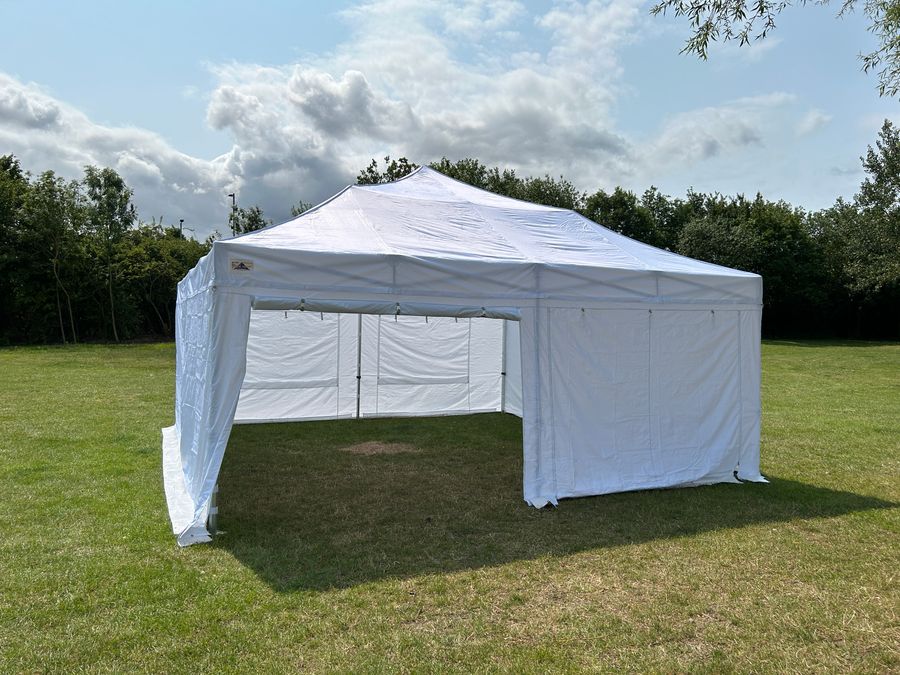
How the Gala Shade Heavy-Duty Frames Compare
All three frames are aluminium and carry a canopy with a fire rating to BS 7837:1996.
How Do You Maintain a Gazebo Through Bad Weather?
Inspect connectors, frame tension and anchor points before and after every wet or windy event, and dry covers before storage.
- inspect connectors and joints
- check frame and canopy tension
- dry covers fully before packing away
- replace damaged components with genuine spares
- check every anchor point
Our guide to cleaning a gazebo covers drying and storage.
Can the Weather Change Quickly During an Event?
Yes. Even in summer, sudden gusts, heavy rain and temperature swings can arrive within the same afternoon. That is why shelters should never be left unattended in severe weather, particularly overnight.

Are Gazebos and Marquees Safe in Bad Weather?
Yes, with preparation, correct anchoring and regular maintenance. Gazebos and marquees shelter events and businesses across every season, and the ones that last are anchored properly, watched closely and taken down before the weather turns dangerous.
Frequently Asked Questions
Can gazebos be used in bad weather?
What wind speed is too strong for a gazebo?
Should sidewalls stay fully closed during strong winds?
Will a gazebo blow away?
Why are gazebo weights important?
Is it safe to be under a gazebo in a thunderstorm?
What causes water pooling on gazebos?
What is the best gazebo for high winds?
Can I leave a gazebo up overnight in bad weather?
Get the Anchoring Right First
Most bad weather problems start with a leg that was not weighted. Our UK team can tell you exactly how much weight your gazebo or marquee needs for the ground you are on.


